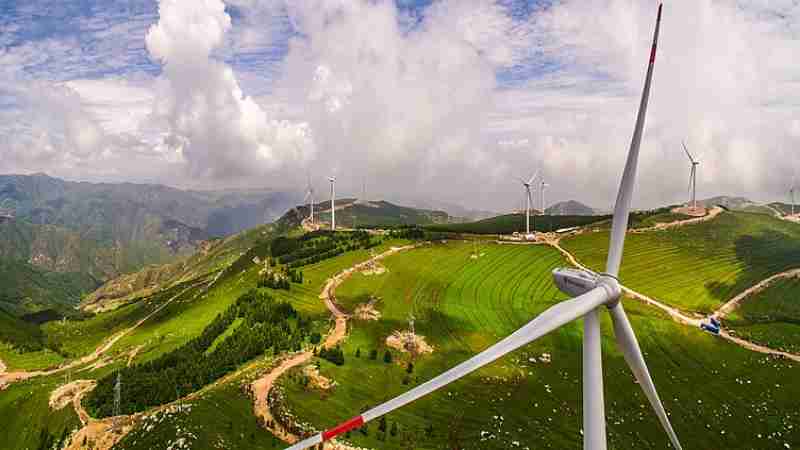
For the past year and a half, China’s carbon dioxide output has either plateaued or decreased, primarily driven by rapid advancements in solar and wind energy production.
The ongoing period of steady or reduced emissions suggests that the globe’s foremost emitter might achieve its emissions peak goal sooner than anticipated.
Sectoral shifts shape the carbon environment
Analysis shows that China’s CO2 releases remained unchanged in Q3 2025 compared to the same period in the previous year.
Stability stems from substantial renewable growth, with solar up 46% and wind up 11%. Renewables met rising electricity demand without adding to the carbon footprint, even as consumption continued to accelerate.
The trend also benefits from declining carbon levels in sectors such as travel, cement, and steel production. The widespread adoption of electric vehicles has contributed to a 5% reduction in transport-related carbon dioxide output.
However, rising greenhouse gas releases from the chemical industry, particularly in plastic production, have offset some of these reductions, preventing an overall drop in total CO2 during the third quarter.
The analysis, based on findings from Lauri Myllyvirta’s work at the Centre for Research on Energy and Clean Air, reveals that China’s CO2 output remained stable in the third quarter of 2025 compared to the previous year.
Part of this stability comes from decreases in the travel, cement, and steel sectors.
Chinas green technology protects nature
The data surfaced as world leaders convene for COP30 in Brazil, a summit occurring amidst growing urgency to combat the climate crisis.
Though President Xi Jinping was absent from the leaders‘ discussions, China’s representatives are participating. UN Secretary-General António Guterres has warned that failing to cap global warming at 1.5°C would constitute a moral failure and deadly negligence.
André Corrêa do Lago, the Brazilian diplomat and president of COP30, commended China for its advances in green technology. He highlighted that the country is developing solutions with a global impact, not solely for its own benefit.
China’s government has committed to peaking carbon emissions by 2030 and reducing them by 7% to 10% by 2035.
While some international observers have found these targets modest, China has a history of exceeding its climate pledges. The current trajectory suggests that the country is well-positioned to meet its goal of peaking emissions well ahead of its stated deadline.