The global market for solar charge controllers is projected to grow substantially, reaching an estimated 156 billion euros by 2031.
This expansion is driven by the increasing adoption of solar energy systems and advancements in power management technology.
The market was valued at approximately 40 billion euros in 2022 and is expected to see a compound annual growth rate (CAGR) of 16.5% from 2023 to 2031.
Drivers of adoption
The increasing deployment of solar systems, driven by urbanization, rising populations, and environmental concerns, is fueling demand for charge controllers.
Government initiatives and policies globally are also playing a significant role. Many nations view solar energy as a means to enhance energy security, support rural communities, and reduce greenhouse gas emissions.
Ambitious renewable energy targets and incentives are driving solar capacity growth. India’s PM‑KUSUM program supports solar pumps and small solar plants for farmers, while the EU’s RepowerEU plan aims to cut fossil fuel dependence and expand renewable energy.
These initiatives are consequently boosting demand for charge controllers.
Technological advancements and market segmentation
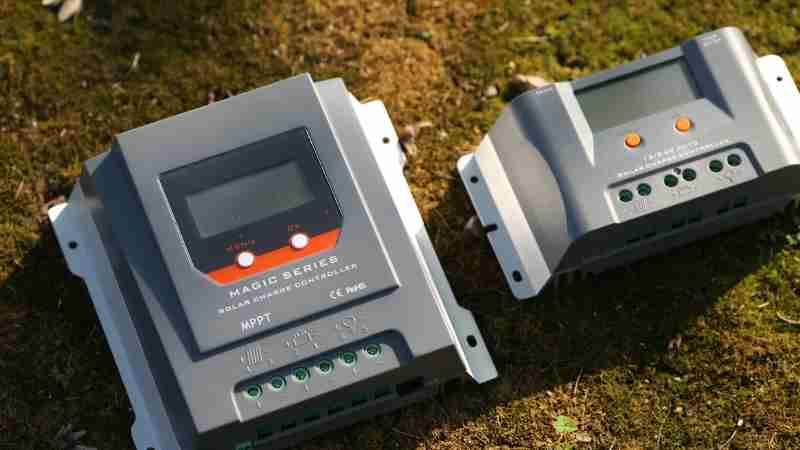
The market is divided into segments based on technology, capacity, and application. Maximum Power Point Tracking (MPPT) controllers, which adjust to capture peak power more efficiently, are projected to see the most rapid growth because they are ideal for large, high‑output systems.
Pulse Width Modulation (PWM) controllers, simpler and more economical technology suited to smaller solar setups, continue to hold a considerable share of the market.
Commercial projects generate the largest share of revenue, residential installations are expanding at the fastest pace, and industrial or utility projects continue to play a significant role.
The outlook for the solar charge controller market remains highly positive. Trends point to growing integration of smart and IoT connectivity for remote monitoring and advanced battery management systems.
There is also a rising emphasis on controllers designed for advanced battery chemistries, particularly lithium‑ion, to extend operational life.
The development of hybrid power systems that combine solar with other energy sources presents additional opportunities for efficient management by these controllers.