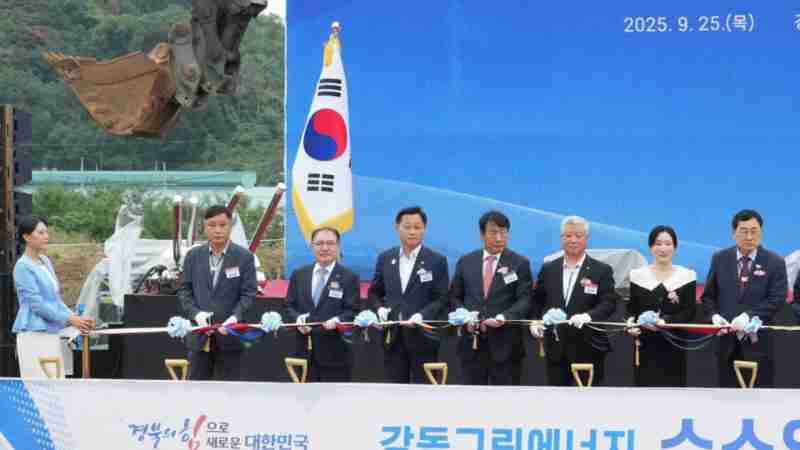
South Korea has begun construction on what is being described as the world’s largest single hydrogen fuel cell power plant. The facility, located in Gyeongju, North Gyeongsang Province, will have a generating capacity of 108 megawatts. Work officially started on September 26, 2025, with a groundbreaking ceremony attended by company executives and local officials. Construction is scheduled to continue for just over two years, with full operation planned for March 2028.
Powering homes with grey hydrogen
The new plant will use hydrogen produced on site from natural gas, a process known as grey hydrogen. While this method releases carbon dioxide during production, the fuel cells themselves generate electricity without combustion, which helps cut local air pollutants such as nitrogen oxides and fine dust.
Experts describe this balance as a transition step in delivering cleaner power where it is consumed today while preparing the infrastructure and expertise needed to adopt renewable-based „green hydrogen“ in the future.
Once completed, it is expected to supply power to about 270,000 households each year. The project carries a reported cost of 819.1 billion won, or roughly €540 million, underscoring the scale of investment South Korea is committing to hydrogen power.
Building momentum for clean energy
The Gyeongju plant is not the country’s first large-scale hydrogen project, but it marks a significant increase in scale. Earlier facilities such as the Shinincheon Bitdream power plant in Incheon had set records at around 79 megawatts. With its 108-megawatt capacity, the new project signals South Korea’s intent to push hydrogen forward as a mainstream energy source.
The effort is backed by industry and public utilities working together, with companies such as Doosan Fuel Cell providing technology and expertise while Korea Southern Power focuses on integrating hydrogen projects into the grid.
The project highlights South Korea’s drive to cut dependence on coal and liquefied natural gas (LNG) thermal power while broadening its energy mix. If the Gyeongju plant delivers as planned, it could stand as a benchmark for nations exploring how hydrogen fuel cells fit into their own transitions to sustainable power.